


Updated June 2026
Frontier Airlines does not offer a dedicated media baggage rate. All film, photography, broadcast, and journalism equipment is subject to the airline's standard baggage policies and fees — no exemptions, no special pricing, and no waivers based on media credentials. As an ultra-low-cost carrier (ULCC), Frontier's pricing model unbundles virtually everything from the base fare. Understanding how that model works is essential before booking any flight with professional gear.
The ULCC Model: What It Means for Media Professionals
Unlike legacy carriers such as United or Delta (where checked bags are included in many fare classes) Frontier charges for almost everything beyond the base ticket price. Carry-on bags, checked bags, seat selection, and even some check-in methods all carry separate fees. The base fare is designed to look cheap. The total cost after adding the bags and services a media professional actually needs is where the real price emerges.
The single most important rule on Frontier: fees increase the longer you wait to pay. The cheapest time to add bags is at initial booking. Fees rise significantly at online check-in, and spike dramatically at the airport. A carry-on bag that costs $29–$69 at booking can cost $99–$117 at the gate. This is not a hypothetical — it is Frontier's published pricing structure.
What's Included Free
Every Frontier fare, on every route, includes exactly one item at no extra charge:
One personal item: Maximum 8″ D × 18″ W × 14″ H including handles, wheels, and straps, and up to 35 lbs. It must fit under the seat in front of you.
This is the only free baggage allowance. No carry-on bag. No checked bag. Everything else costs extra unless you purchase a bundle or hold qualifying elite status.
For media professionals: A small camera backpack or a laptop bag with a compact mirrorless camera and one or two lenses may fit within the 8″ × 18″ × 14″ personal item limit. Test your bag against these exact dimensions before flying — Frontier gate agents use sizing frames during boarding and charge for oversized personal items on the spot.
Carry-On Bag Rules and Fees
Dimensions: Maximum 10″ D × 16″ W × 24″ H including handles, wheels, and strapsWeight: Maximum 35 lbs (15.9 kg)Fee: Varies by route and timing

All fees are non-refundable and apply each way. A round-trip carry-on at booking costs roughly $58–$138; the same round-trip paid at the gate can cost $198–$234.
Board First add-on: Purchasing a carry-on automatically makes you eligible to add Board First ($2.99–$14.99 per direction), which boards you with Group 1 and guarantees overhead bin space. For media professionals concerned about carry-on camera bags, this is a worthwhile add-on — full flights on Frontier regularly run out of overhead bin space before all passengers board.
Checked Bag Rules and Fees
This is a critical difference from legacy airlines: Frontier's standard checked bag weight limit is 40 lbs (18.1 kg) — not 50 lbs as at most major U.S. carriers. This lower threshold is the most common and most costly surprise for media professionals who pack gear into cases.
Maximum size: 62 linear inches (length + width + depth) including handles, wheels, and strapsMaximum weight: 40 lbs standard; bags over 100 lbs not acceptedMaximum size accepted: 110 linear inches (bags over 110 linear inches not accepted)
Checked bag fees vary by route and booking timing. Use Frontier's Bag Price Checker at flyfrontier.com for your specific route. Fees are lowest at initial booking.
Overweight and Oversize Fees
These are the fees that cause the most financial damage for media professionals.
Overweight Fees (as of April 4, 2026)
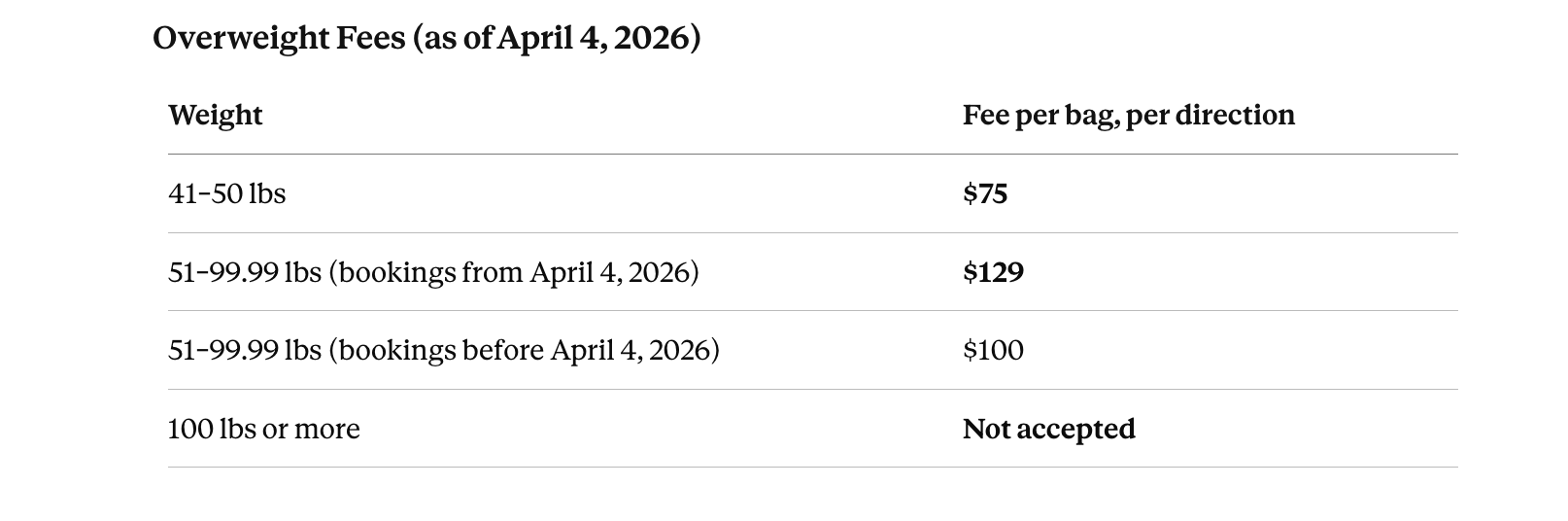
Note: The overweight fee for bags in the 51–99.99 lb range increased from $100 to $129 for all bookings made on or after April 4, 2026 — a 29% increase. This is sourced directly from Frontier's official Optional Services page.
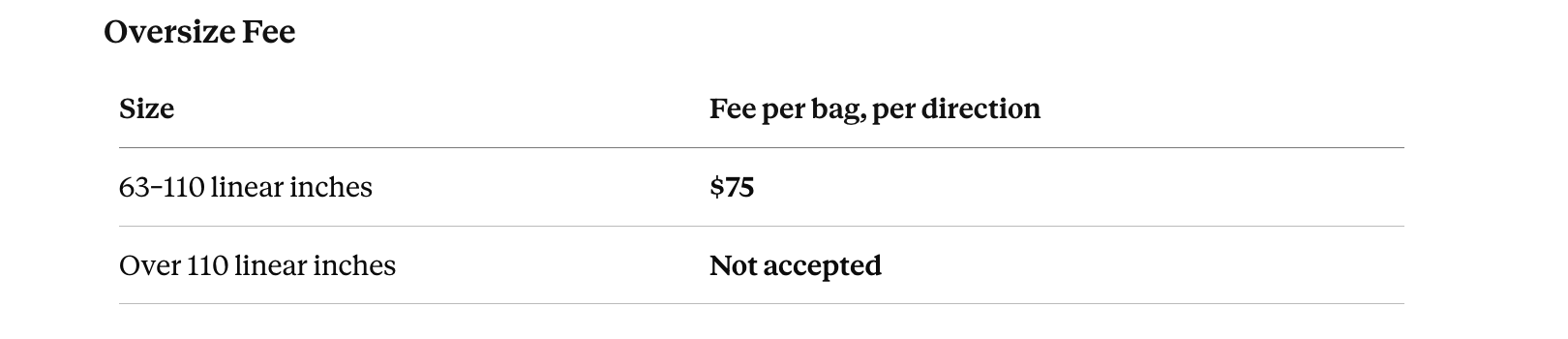
Overweight and oversize fees are in addition to the standard checked bag fee. A 60 lb case measuring 75 linear inches would incur the checked bag fee + $129 (overweight 51–99.99 lbs) + $75 (oversize) = potentially $200+ per direction for a single bag, before the base checked bag fee itself.
Canada Routes
Bags traveling to or from Canada are subject to a higher maximum weight — up to 70 lbs — before the overweight fee applies. If your media assignment takes you on a cross-border routing, this is worth factoring in.
The 40 lb: Why This Matters More Than Any Other Rule
Most professional camera cases and production bags are designed around the 50 lb standard used by legacy carriers. Frontier's 40 lb limit catches media professionals who have calibrated their packing to that standard.
A typical single-camera professional kit in a checked case:
- Pelican 1510 or similar hard-shell carry-on: 5–6 lbs empty
- 2 camera bodies: 3–5 lbs
- 4–6 lenses: 4–12 lbs
- Lighting, flash, and accessories: 5–15 lbs
- Cables, chargers, hard drives: 3–8 lbs
That totals 20–46 lbs before adding grip tape, protective foam, batteries (which must come out for cabin travel), or any additional equipment. A case that would pass at 48 lbs on United or Alaska will cost a $75 overweight fee on Frontier.
The fix: Weigh every case at home with a luggage scale. Redistribute weight between cases. Consider moving heavier items — charger blocks, audio gear, cables — into your carry-on or personal item to stay under 40 lbs in each checked case.
Ways to Reduce or Eliminate Bag Fees
Bundle Fares
Bundles are Frontier's most efficient way for media professionals to reduce bag costs. Available at booking, they package bags and services at a discount compared to buying them individually.

The Business bundle is the most compelling for media professionals: it includes two checked bags with a 50 lb weight limit (higher than the standard 40 lb limit), plus a carry-on and priority boarding. If you're checking two bags of gear, the Business bundle often works out cheaper than purchasing each component separately. Bundles start from $49 per direction but vary by route — use the bundle calculator at booking to compare. FRONTIER Miles can also be redeemed for bundle purchases (Economy from 2,000 miles, Business from 8,000 miles).
FRONTIER Miles Elite Status
Elite status is earned by spending on Frontier flights and ancillary purchases. Benefits by tier:
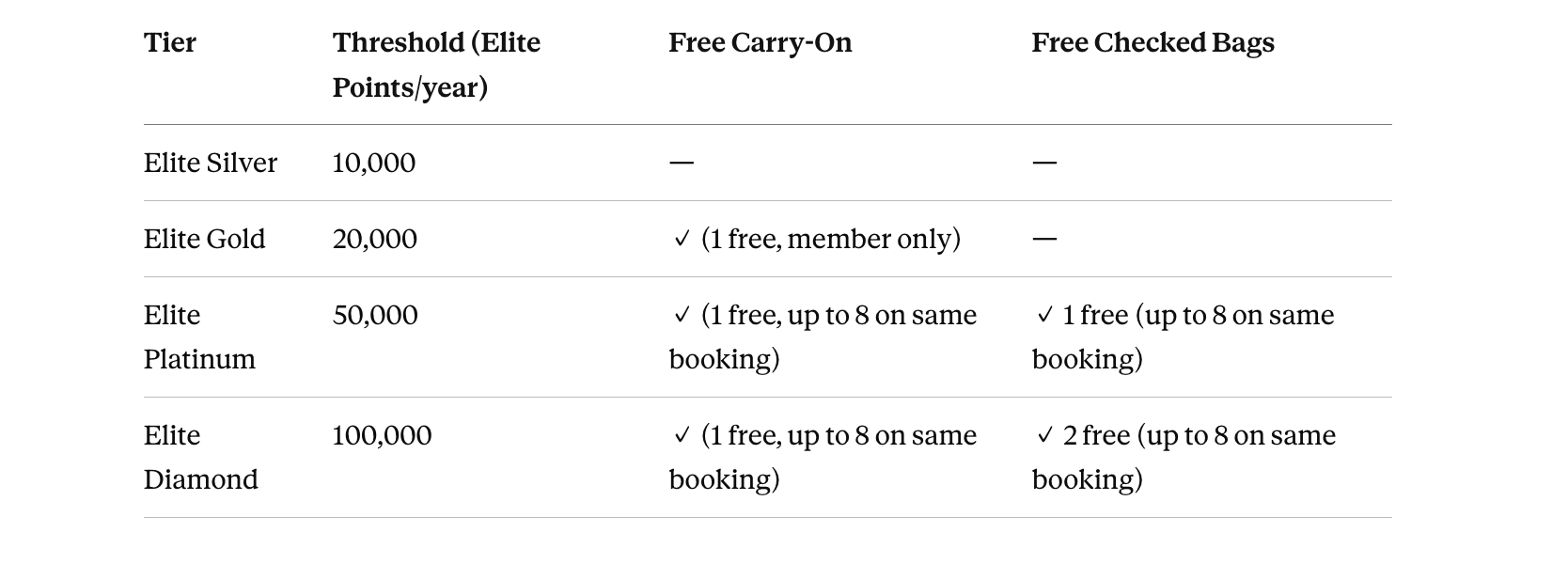
Elite Platinum members receive a free carry-on and one free checked bag for everyone on the same reservation — up to eight passengers. Elite Diamond bumps the free checked bag allowance to two. Crucially, Frontier's official policy states that overweight and oversize fees are waived on the free checked bags for elite members. This is meaningful: Diamond members don't just get two free bags — they get those two bags without overweight or oversize surcharges.
Elite Gold status has also been made relatively accessible through status match offers, status challenges, and promotional pricing ($69 for Gold status was available through 2026 for members of qualifying other airline programs).
The Frontier World Mastercard
The Frontier Airlines World Mastercard does not include free bag benefits. To receive free bag benefits, you need Elite Gold, Platinum, or Diamond status. The credit card is primarily useful for earning FRONTIER Miles points toward status and award travel, not for direct baggage fee waivers.
Lithium Batteries: Non-Negotiable Rules for Media Professionals
Frontier follows FAA and IATA regulations on lithium batteries, which are federal requirements applicable to all U.S. carriers.
All spare lithium batteries must travel in carry-on baggage only. They cannot go in checked bags.
This applies to:
- Camera batteries (LP-E6, EN-EL15, NP-FZ100, etc.)
- Cinema and V-mount batteries
- Drone batteries
- Power banks and portable chargers
- Any spare battery not installed in a device
Batteries installed inside a device may be checked if the device is fully powered off and protected from accidental activation, and the battery is within watt-hour limits.
Watt-hour limits per FAA rules:
- Up to 100 Wh: No restriction; carry-on permitted freely.
- 101–160 Wh: Up to two spare batteries per person, carry-on only, airline approval required in advance.
- Over 160 Wh: Not permitted on any passenger aircraft; must be shipped as dangerous goods cargo.
On Frontier this creates a specific planning challenge: since carry-on bags cost extra, media professionals must factor in the bag fee for the carry-on that will hold their spare batteries. You cannot put batteries in your one free personal item to avoid paying the carry-on fee and then check your camera bag — you must bring a compliant carry-on for the batteries regardless. Plan for the carry-on fee in your travel budget on every Frontier booking.
Practical Packing Strategy for Frontier Flights
Model the Total Cost Before Booking
Build a complete cost model before comparing Frontier's fares to legacy carriers. A $59 base fare plus a carry-on ($55) plus one checked bag ($50) plus seat selection ($15) plus Board First ($10) can become a $189 total per direction — comparable to or exceeding a single fare on a legacy carrier that includes bags and seat selection. The Business bundle often provides better value than buying items à la carte once you factor in two checked bags.
Use the Personal Item Slot Strategically
If your camera bag fits within 8″ × 14″ × 18″ and 35 lbs, it qualifies as a free personal item. A compact camera pouch or a small mirrorless kit may pass. A professional camera backpack almost certainly will not. Know which slot your bag occupies before you arrive.
Pack to the 40 lb Limit, Not 50 lbs
Reframe all your packing decisions around 40 lbs per checked bag. Build in a 3–4 lb buffer (aim for 36–37 lbs) since luggage scales can vary and you want to avoid the $75 fee on a marginal weight. If traveling with multiple cases, weigh and redistribute at home.
Use Hard Cases and Document Contents
Pelican, SKB, and similar hard-shell cases are the right choice for checked media gear on any airline. On Frontier, where checked bag handling at high-volume airports can be less attentive than at legacy carriers, protection matters more. Keep a detailed packing inventory inside every case and photograph the packed contents before closing.
Know Your Case Dimensions
The 62 linear inch standard limit on Frontier is standard across U.S. airlines. Most production-grade hard cases exceed it:

Frontier's oversize fee ($75) is lower than Alaska Airlines ($200) or Hawaiian Airlines ($200) for oversized bags — but it still applies, and it still stacks with the overweight fee.
Consider Shipping Gear Ahead
For large-format productions, broadcast equipment, or any assignment where gear volume and weight exceed what Frontier's structure can accommodate cost-effectively, shipping via FedEx, UPS, or a specialist A/V freight company will often be cheaper and far less stressful than managing overweight and oversize fees per bag, per direction.
Book Through the App to Avoid the Web Check-In Fee
Frontier charges up to $5 per passenger for web check-in. Using the mobile app is free. Add bags, check in, and manage your booking through the Frontier app — it is cheaper than the website for check-in.
Hidden Fees That Catch Media Professionals Off Guard
Beyond bags, Frontier charges for things that most airlines include by default:
- Seat selection: From $15 per direction; not included in Basic fare (included in bundles)
- Web check-in: Up to $5 per direction (free on mobile app)
- Airport agent assistance: Up to $25 per direction if you need in-person help at the counter
- Call center booking: $35 per ticket
- Same-day confirmed flight change: $99 per person
If your shoot schedule changes at the last minute and you need to change a Basic fare, the combination of change fees and fare differences can be significant. Booking the Economy bundle or higher eliminates change and cancellation fees — relevant for assignments where the schedule is fluid.
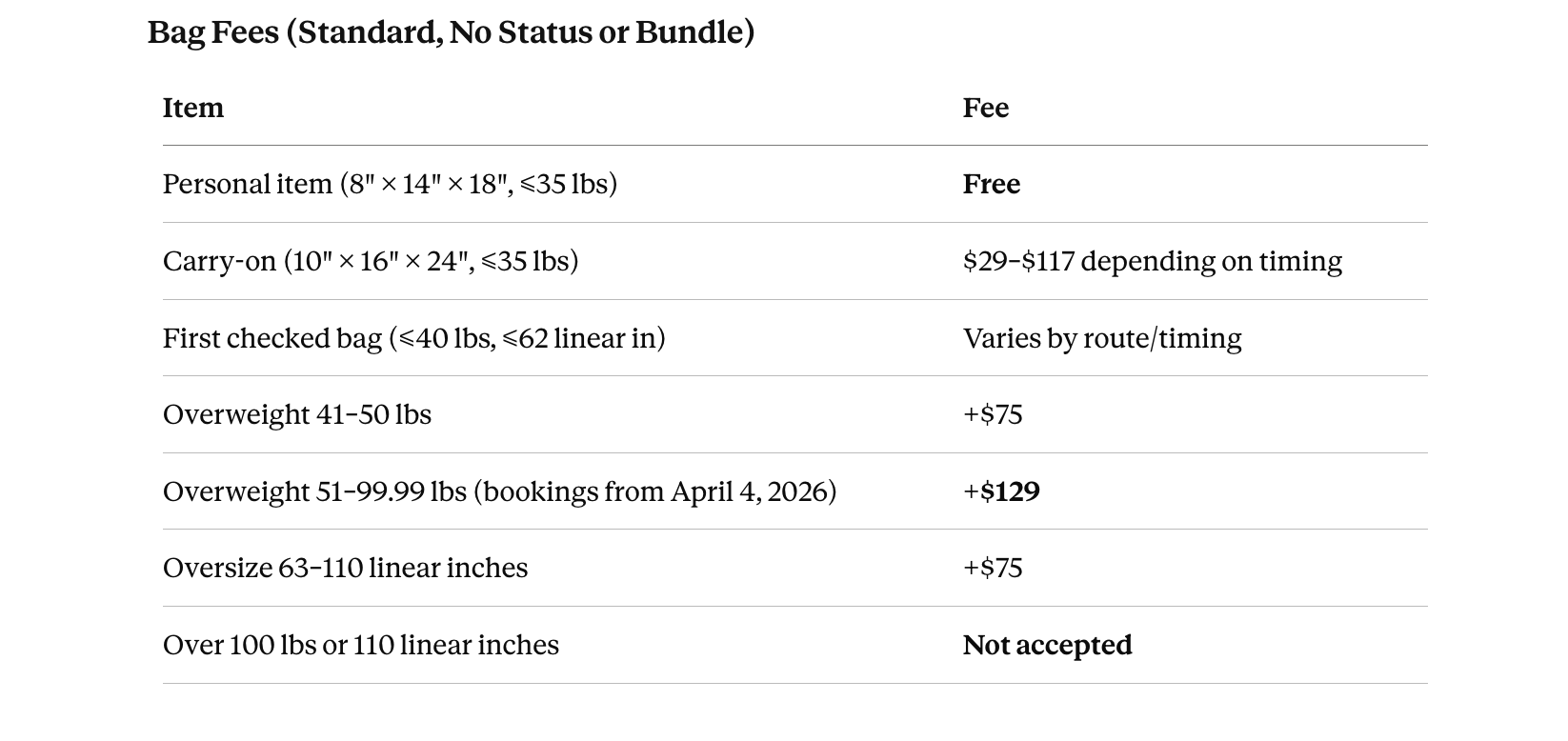
Summary: Fee Reference for Media Professionals


Fly With Media's Position
At Fly With Media, we are disappointed that Frontier Airlines offers no media baggage rate, and we note that its ultra-low-cost structure imposes particularly high operational costs on media professionals traveling with professional gear. The 40 lb checked bag limit — 10 lbs below the industry standard — combined with steep per-bag fees and the cost of a mandatory carry-on to transport batteries makes Frontier one of the more expensive airlines in practice for gear-heavy media travel, despite its low base fares.
We encourage media professionals to model total trip costs carefully before booking Frontier for gear travel. When flying Frontier is the best or only option, the Business bundle or Elite Diamond status offers the most cost-effective framework for professionals checking multiple bags of equipment.
Fee data sourced from Frontier Airlines' official Optional Services page and Bag Options page as of June 2026. Always verify current fees using the Bag Price Checker at flyfrontier.com before booking, as fees are route-specific and subject to change.


